Waikato ai
Remove the Friction, Restore the Flow
Every
process needs to flow from start to finish without interuption, it
should flow through departments, through people, and through hierarchy. A
process needs to flow like a river. When I think of a truly great
process I think of the Waikato river in New Zealand flowing from the mountains through
towns and plains on its way to the sea, bringing life and growth
wherever its waters flow.
And that's what a great process does, it brings life and growth to everything it touches.
In no particular order I'll be sharing my thoughts and advice on the subject of process here.
FROM 9... TO 5.
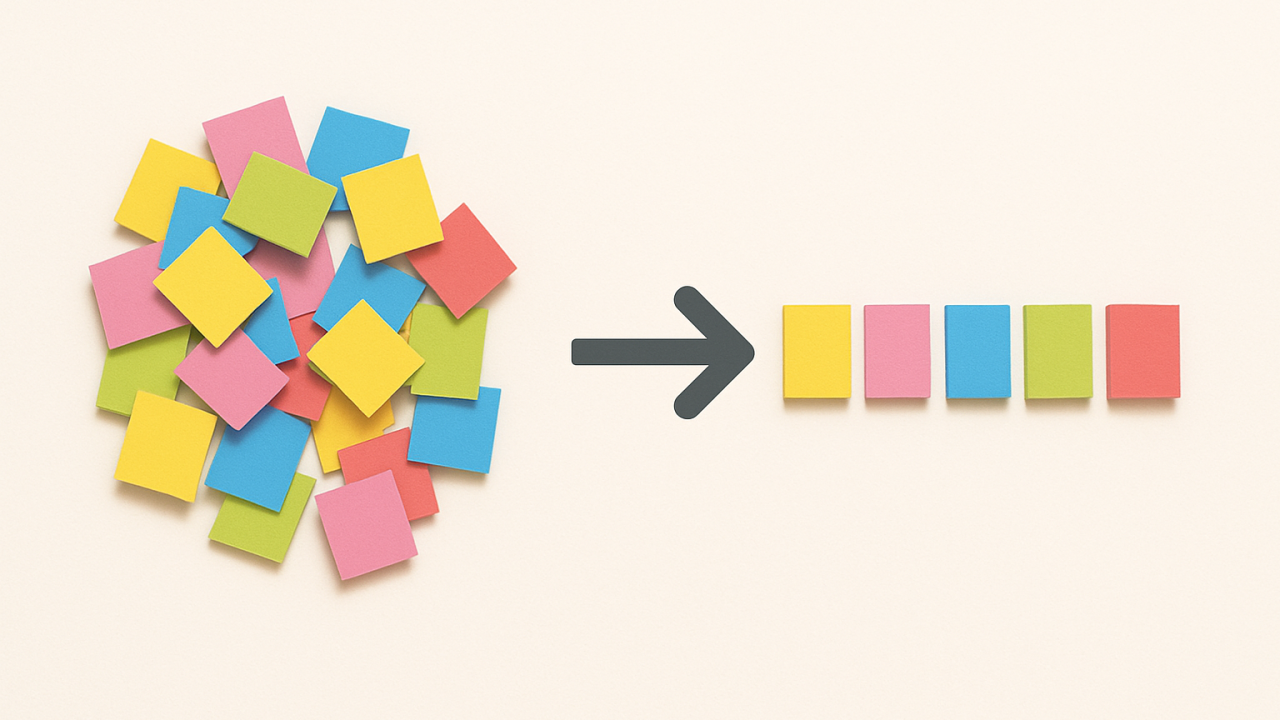
The great philosopher and philanthropist Dolly Parton once told us "Working 9 to 5, what a way to make a living!"
And she was right, I think people should ALWAYS be working FROM 9 TO 5. No, not the hours on the clock or the total amount of hours you're working, I think everyone should always be working on how they can take a task that takes 9 steps to complete and figure out how to do it in 5.
It's not that difficult when you set your mind to it and I'll give you some simple tools and advice to get you started on your journey to making your work life more efficient and free up more of your time that can be spent working on your business instead of in your business.
Count your steps.
Every click, every copy&paste, every export from one system that leads to an import on another system, just count the steps in your head and be aware of how many there are to complete the task.
Document the steps.
Write down the steps you take to perform the task, from start to finish, get it all down on paper. There are no wrong answers here, just write in as much detail as you can, document every part of what you have to do so the task gets done. Nobody is going to score or judge what you put down, it’s just for you right now so let it flow openly and honestly.
Now…This is very important.
Close your eyes and clear your mind. Take a deep breath, let it out slowly and when you open your eyes look at the steps you’ve written down and ask yourself, "Does every single one of these steps REALLY need to be done by me?"
If the word "No" comes to mind then you've opened yourself up to the possibility that things could be done in a more efficient way while still achieving the same goal.
Congratulations, most people don't even make it this far, they simply accept the way of things without ever having the bravery of asking "What if?".
Challenging your own assumptions is the hardest part of improving your process, it’s a lot easier if other people do it for you but as the process owner you have to take on this responsibility yourself, and you have to get into the habit of doing it well and doing it often.
Map the steps.
Now this is where it gets expensive and super complicated (I'm joking, stay with me here).
In order to proceed you will need to invest £2 to £3 in order to cover the cost of a pack of Post-It notes. Now detail each step you perform to complete the task on its own sticky note. Put these up on the wall somewhere or simply down on your desk in order from start to finish.
Take a step back, clear your mind, and breathe… actually go take a walk around the block or go make yourself a coffee (Tea is also fine, while you're at it I'll have one too - milk two sugars please)... anyway - just do something that takes your focus and attention away from this for a good few minutes, let your brain rest and reset itself so when you return to it you can look at it as if it’s somebody else's method.
Every single Post-It is a step that has to be taken. As the process owner you’re responsible for every single step, every colourful square that’s up on that wall, every single time.
Count them - how many are there? If there's 9 or more I want you to start getting that Dolly Parton tune in your head as you ask yourself can we go FROM 9, TO 5?
Don't worry about the “HOW will we…” at this point, just ask yourself “CAN we”?
This is a method that was taught to me many years ago by one of the smartest people I’ve ever known, it’s very simple, it costs almost nothing and I’ve seen it be the first step in delivering results for increasing efficiency throughout my career. Getting the very rough outline of your process out of your head and into the real world is the first part of improving the way you do things, and saving yourself time without losing the quality of what you already do so well. The efficiency this brings translates directly into your increased capacity to take on new work, improve customer satisfaction, or simply reducing stress so you can think more clearly about your business strategy.
This is what I call the Level 2 journey - the path of taking your process from inside your head to out into the real world. It's the crucial first step in building a more robust, scalable, and profitable business. And it's the start of improving your method, making your job or your business more efficient and less painful without sacrificing outcome, quality, or customer service.
Taking the time to map out your process is a game-changer for finding hidden efficiencies and new opportunities yet it’s so often ignored by small businesses who can benefit from it the most. If you really believe you're "Too busy to figure out how to become less busy" talk to someone who knows about this stuff, there are plenty of us around.